
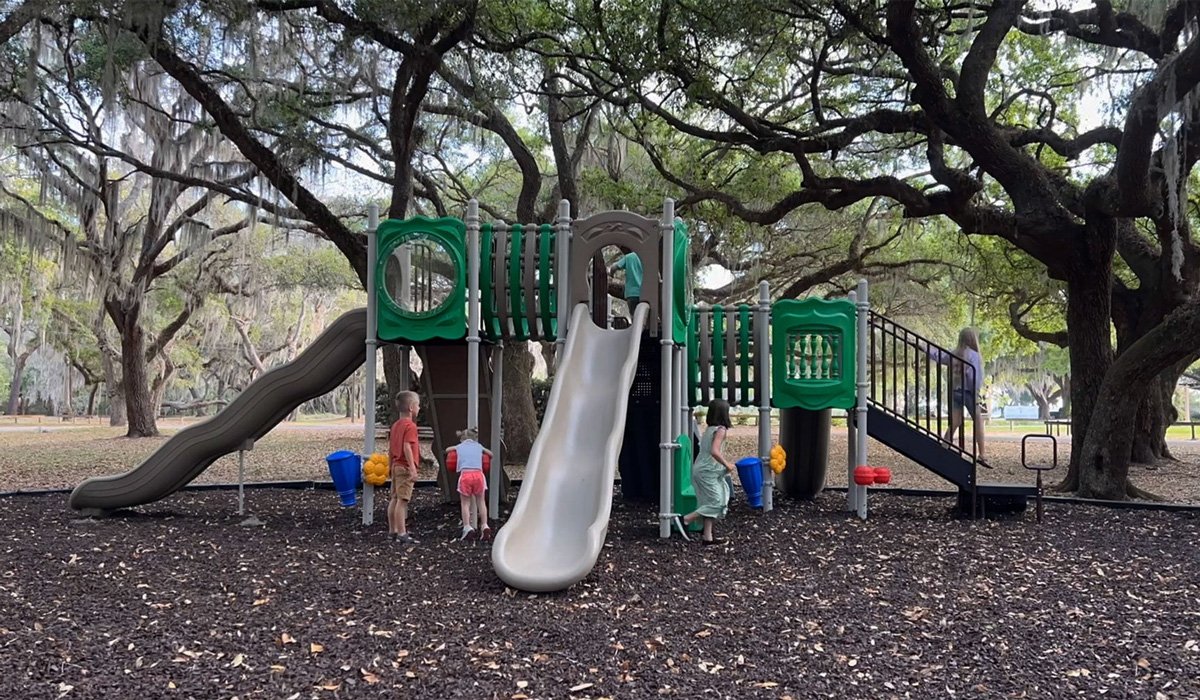
4 Proven Ways Community Spaces Keep Families Connected
Collaborative guest post
In an age where parents spend less face-to-face time with their children, the role of public spaces has never been more critical. Yet many parks and schoolyards feature isolated play units that encourage brief visits rather than extended stays.
In fact, an estimated 100 million people in the U.S. do not currently have access to parks within a 10-minute walk, creating a missed opportunity for connection. With strategic planning, any outdoor area can be transformed into a magnetic community hub where families linger and connect.
Important Note: The playground systems and amenities discussed here are large-scale organisational investments. Due to their size, required safety surfacing, extensive space needs, and capital cost, they are not designed for residential backyards or individual purchase.
1. Lay the Physical Foundation with Inviting Design
A successful community space begins with a physical environment that encourages visitors to stay longer. This means prioritising inclusive, scalable play equipment that serves a wide range of ages and abilities.
By breaking the footprint into clearly signed zones, such as early childhood areas and adventurous climbers, visitors can self-sort. Considering modular options like nature-themed climbers or premium playground equipment from WillyGoat allows you to adapt as your community’s needs evolve.
Safety and compliance are non-negotiable foundations for public play. All equipment must meet ASTM F1487 performance requirements, and layouts should follow the CPSC Public Playground Safety Handbook. This includes ensuring adequate fall-zone spacing and using proper impact-attenuating surfacing.
Beyond the play structures, amenities for caregivers are what turn a 20-minute visit into a two-hour memory.
Clustered seating under permanent shade, accessible hydration stations, and clean restrooms are essential. For adjacent indoor areas, furnish a community room with durable seating to create a comfortable parent lounge.
| Key Insight: A truly inviting space caters to everyone. Prioritising amenities for caregivers, such as shaded seating and clean restrooms, is just as crucial as the play equipment itself, turning short visits into lasting memories. |
2. Program the Space to Connect Families with Resources
A well-designed space is only the beginning, as strategic programming transforms a static environment into a dynamic resource hub. Before launching, build a resource web by creating a directory of local services such as mental-health clinics, tutoring, and food cooperatives.
Make this information easily accessible through QR-coded signage and a digital portal so families can discover support while their children play.
Think holistically about the needs of caregivers by offering parent workshops, bilingual story hours, or even providing a lactation station. When families feel seen and supported, they are more likely to return and become advocates for the space.
Simple, effective messaging, such as emergency numbers on shade poles or banners that promote events, delivers crucial information and keeps the community engaged.
| Pro Tip: Transform your space into a dynamic resource hub. Use simple QR-coded signage to connect families with a digital directory of local support services, from mental health clinics to after-school tutoring. |
3. Overcome Social Barriers to Build Community

Photo from Pexels by Michael Morse
Even the best-designed spaces can feel intimidating if social barriers prevent visitors from connecting. Proactive design can help turn strangers into neighbours, which is critical because research shows that people who are socially disconnected are between two and five times more likely to die from all causes.
Address common constraints like limited time with short pop-up games or combat social anxiety by integrating small “nook” seating pods. This is especially true for older adults, as 21% report feeling lonely or socially isolated.
Look for everyday opportunities to spark connections on-site. A simple whiteboard where parents can list impromptu playdate ideas or a “Drop-off Chat Zone” near the parking area can make a significant difference.
Mini-programs also build momentum; a “Kindness Loop” wall where kids swap notes or Saturday potlucks can foster a powerful sense of belonging. Remember, the equipment lays the groundwork, but consistent programming brings it to life.
4. Ensure Safety and Compliance to Protect Your Investment
Protecting your community and your investment requires an ongoing commitment to safety and maintenance. Schedule certified playground safety inspections at least every six months and post the dates publicly to build trust.
A smart financial practice is to allocate about 10% of the initial capital cost annually for maintenance, covering everything from surfacing top-offs to hardware replacements.
Meticulous record-keeping is a cornerstone of responsible management. The CPSC recommends keeping detailed logbooks of all repairs and maintenance activities. This documentation not only ensures accountability but can also significantly reduce liability claims.
By demonstrating a proactive approach to safety, you create a secure environment that families can enjoy with peace of mind.
| Warning/Important: A one-time purchase is a long-term commitment. Plan to allocate about 10% of the initial capital cost annually for maintenance to ensure safety, protect your investment, and maintain community trust. |
The Path Forward
Transforming an outdoor area into a thriving community hub is a powerful investment in public well-being. By focusing on inviting design, strategic resource programming, inclusive social planning, and rigorous safety standards, any organisation can build a space where families truly connect.
These efforts create more than just a place to play; they build the foundation for a stronger, healthier, and more resilient neighbourhood.


![Elements Tested During an MOT: The Ultimate Guide [AD]](https://plutoniumsox.com/wp-content/uploads/2022/07/car-mot.jpeg)


![How CBD Stores Are Gaining Popularity Around the World [AD]](https://plutoniumsox.com/wp-content/uploads/2022/08/featured.jpeg)