Mount Fuji Vistas and the Culinary Wonders of the Kansai Region: A Comprehensive Perspective on Japan’s Main Island
Collaborative guest post
A Mountain That Refuses Urgency
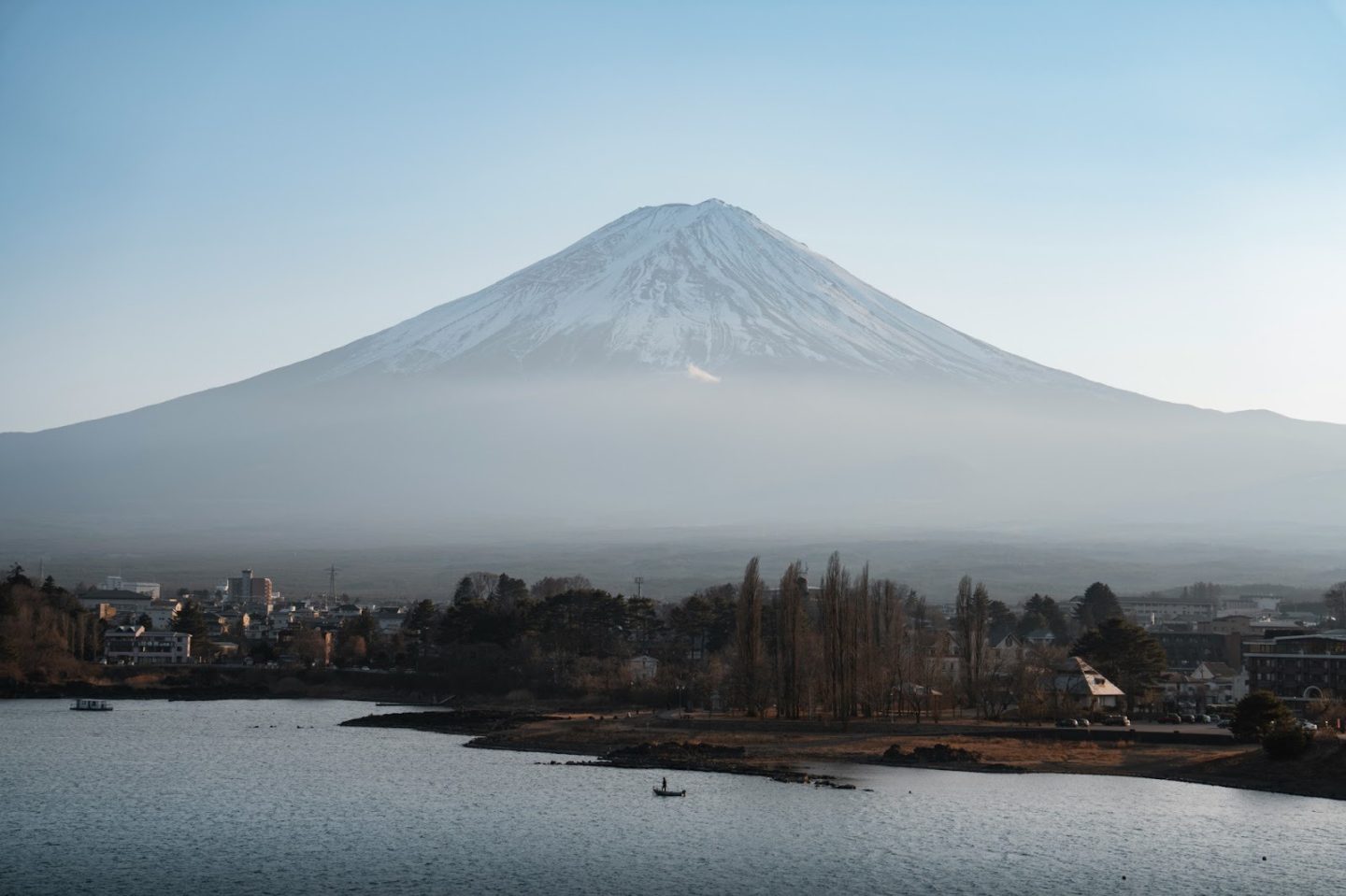
Mount Fuji rarely introduces itself properly. It appears between structures, behind cables, above the roofline of something ordinary. Even on days when the sky feels newly washed, the mountain seems undecided about being seen. The peak carries snow lightly, not dramatically, as if the white might dissolve with a small change in temperature.
Fuji remains still while everything else circulates.
Shifting Westward
Leaving the capital, the landscape begins rearranging itself, and somewhere beyond the layered skyline the Tokyo to Kyoto train moves steadily through suburbs, fields, and sudden clusters of buildings that seem to appear without preparation. Inside the carriage, nothing calls attention to the transition. Seats face forward. Conversations remain measured. Someone unwraps food carefully packed into compartments.
Mount Fuji sometimes enters the frame of the window unexpectedly — a brief alignment between track and mountain — then withdraws behind overpasses and industrial structures. The appearance feels incidental, almost shy. Hours stretch quietly. The city thins. Rooftops change shape. Kyoto approaches without declaration.
What lingers is not arrival but continuity. The train does not break the landscape; it threads through it.
Between Old Wood and Moving Water
Kyoto settles differently. Streets narrow. Wooden façades darken with age. Temple gates do not tower; they frame. Gravel courtyards open in pale expanses that seem to absorb sound. Even footsteps soften.
Food here mirrors that restraint. Small dishes arranged with attention but without flourish. Broths clear enough to appear unfinished until tasted. Seasonal vegetables prepared in a way that does not attempt transformation. Nothing is overstated.
Later in the day, the Kyoto to Osaka train carries the movement forward almost mid-conversation, the carriage filling and emptying quickly as stations pass in measured rhythm. The distance feels less like travel and more like a breath between sentences.
Osaka meets you with a slightly quicker pulse. Brighter signage. Wider pavements. A river cutting cleanly through the city, catching light in restless fragments.
Kansai at Street Level
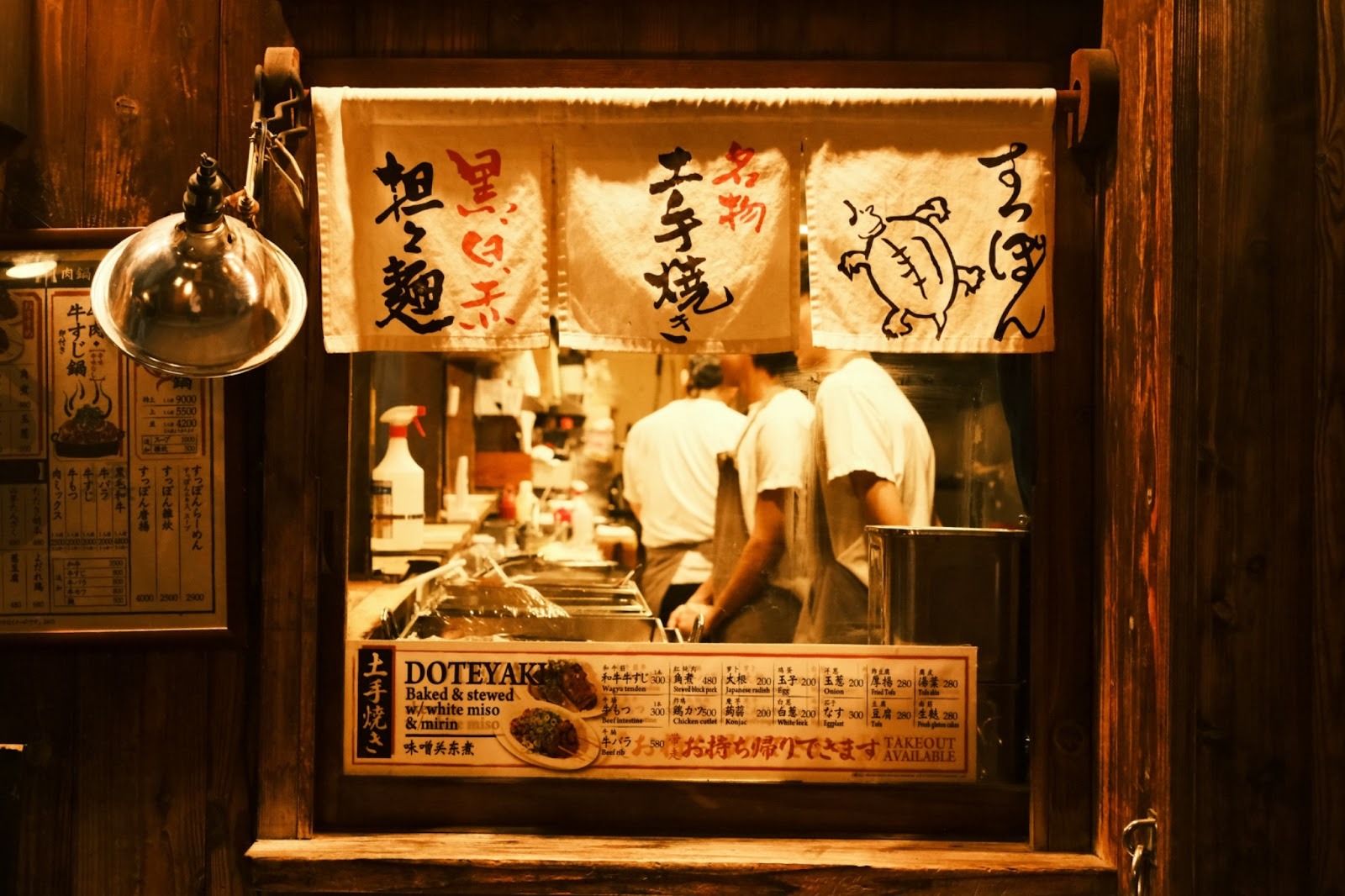
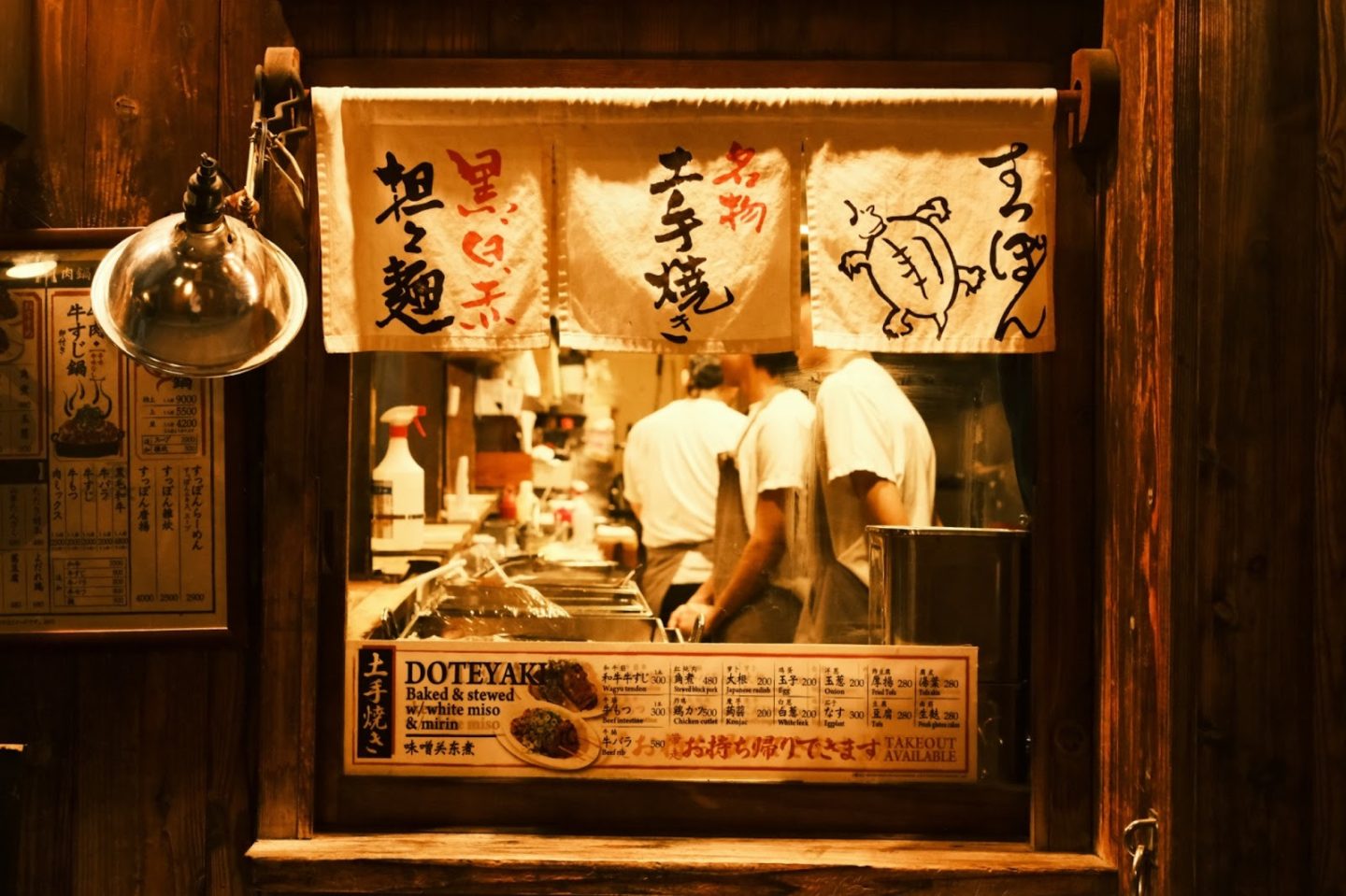
In Osaka, cooking happens outwardly. Steam rises into open air. Batter spreads across hot surfaces with a sound that draws attention without demanding it. Takoyaki spheres rotate in shallow moulds until they hold their form. Okonomiyaki settles beneath a flat spatula, cabbage softening into cohesion.
People eat standing, leaning, pausing briefly before moving again. Flavours feel immediate — soy, ginger, sea. There is repetition in the gestures of vendors. Turning. Brushing. Folding. Over time the rhythm becomes familiar enough that you stop distinguishing one stall from the next.
Kyoto remains quieter in comparison, though not in opposition. Sweet bean paste shaped into seasonal forms. Tofu that carries the faintest trace of soybean, unmasked by excess. The contrast is less sharp than it first appears. Both cities rely on attentiveness, only expressed differently.
Water, Rail, and Distance
Beyond the urban centres, Kansai opens gradually. Hills gather around smaller towns. Rice fields hold shallow mirrors of sky. Along the coast, fishing boats rest with an ease that suggests long repetition rather than effort.
Rail lines connect these spaces with minimal interruption. High-speed routes, local services, narrow rural tracks — all moving in quiet coordination. Journeys begin to blur. A mountain remembered from one morning appears again in thought while walking beside a river days later. A bowl of noodles eaten in Osaka recalls something tasted earlier in Kyoto without clear reason.
Fuji’s outline returns intermittently in memory, even when no longer visible. It becomes less a location and more a reference point — steady, reserved, almost indifferent to observation.
Eventually the narrative thins. Stations merge in recollection. Temple courtyards and market stalls coexist without needing to contrast. The island does not resolve itself into clarity. It remains layered — mountain, carriage, street grill, gravel — all continuing quietly beyond the moment of noticing.
And perhaps what stays, long after the routes and districts lose their order, is simply a sense of passage — a window briefly framing a white peak, the faint vibration beneath your feet as tracks carry you onward, the warmth of something freshly cooked held between your hands. The island does not insist on a final image. It allows things to overlap instead — mountain air and city steam, temple shadow and station light — continuing somewhere just beyond where memory pauses.