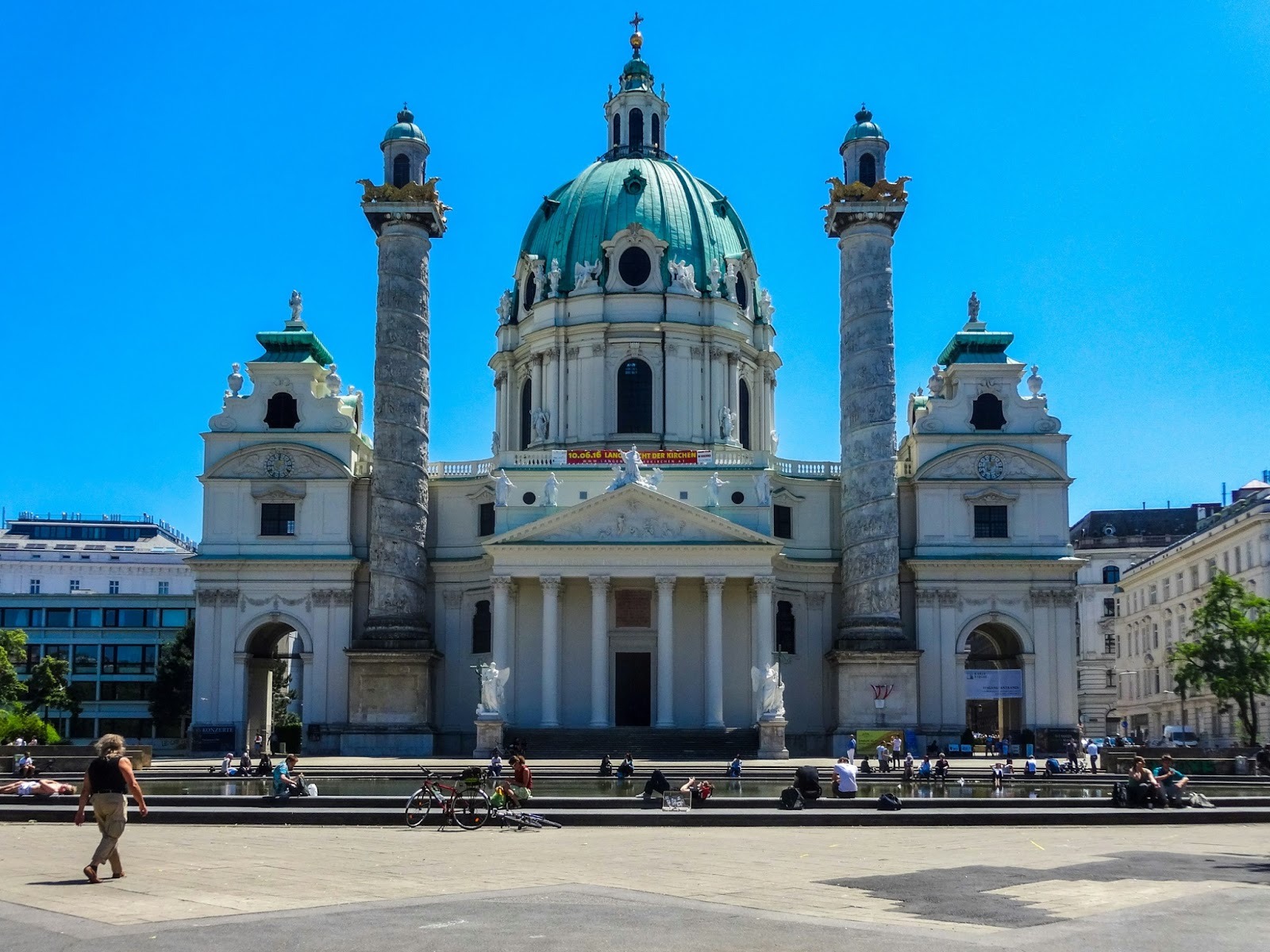
Baroque Splendor in the Old Town and the Elegance of the Danube: Blending Bohemian and Magyar Legacies
Collaborative guest post
Stone Before Explanation
Prague doesn’t arrange itself for viewing. It simply stands there — curved façades leaning slightly inward, statues balanced in gestures that feel unfinished rather than triumphant. Early light touches the edges of domes and then slips away again. The cobblestones hold last night’s coolness longer than expected.
You walk without deciding to look at anything in particular. Details arrive on their own. A balcony wrought into spirals. A figure carved high above a doorway whose expression seems less symbolic than distracted. The buildings do not compete for attention. They repeat themselves quietly. Curve after curve. Shadow after shadow.
Even the air feels layered, as though centuries never fully cleared.
Somewhere Between Capitals
Midway through the countryside, while the Prague to Vienna train moves through stretches of land that seem undecided between field and forest, it becomes difficult to say exactly when one atmosphere thins into another. The carriage hum remains constant. A coat shifts against fabric. A reflection crosses the window and then dissolves.
Villages appear briefly — pale walls, a church tower, a few parked cars — and then retreat behind trees. Nothing marks the border with ceremony. The train continues in the same tone it began.
You begin to notice that travel here feels less like transition and more like elongation. The landscape stretches; it does not replace itself.
Vienna Without Announcement
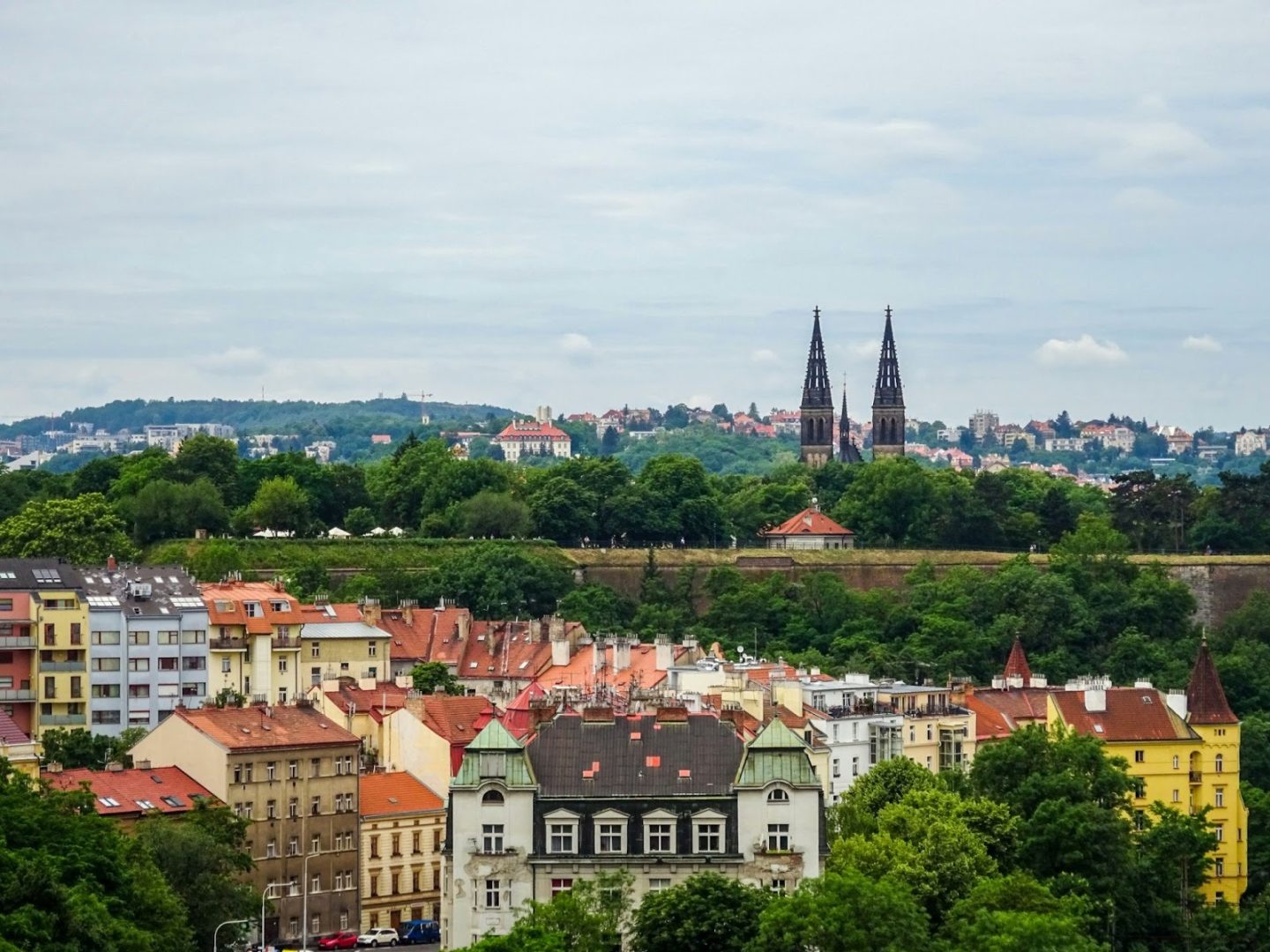
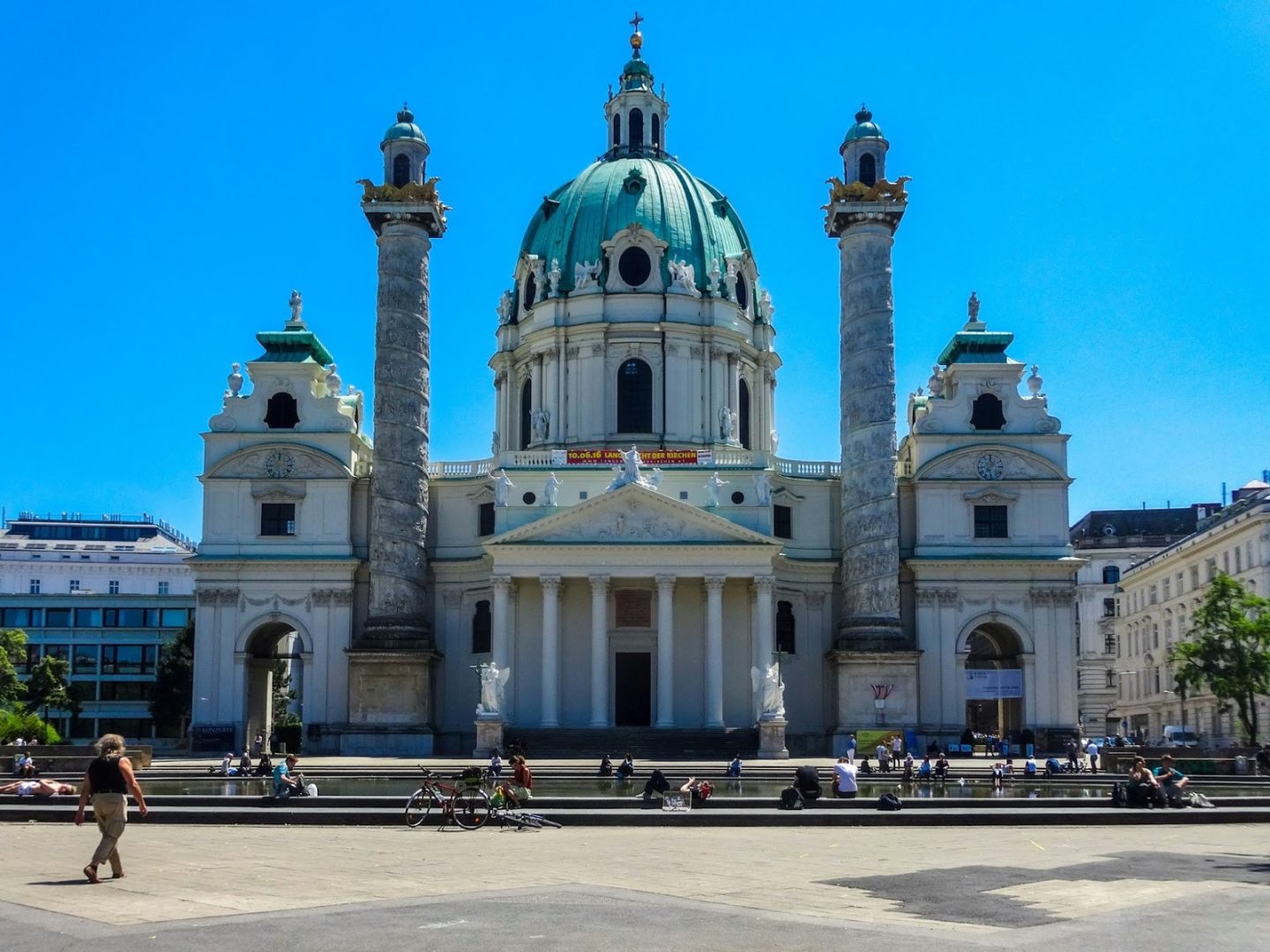
Vienna does not feel dramatically different at first. Streets widen, yes. Buildings hold their lines more steadily. But the same restraint lingers. Courtyards open quietly between façades. Coffeehouses glow from within, not brightly, just enough.
Marble tabletops hold newspapers that no one seems to rush through. A spoon rests against porcelain with a faint sound. The Danube moves at a distance, visible in fragments between bridges and embankments, its surface shifting without insisting on reflection.
There is symmetry, but it doesn’t declare order. It simply exists. Windows align. Arches repeat. Over time you stop registering the precision and instead register the calm.
Later, as the Budapest to Vienna train traces part of the river’s path in reverse, fields widen again and the sense of direction feels less important than the repetition of movement itself. The carriage vibrates lightly. Someone closes their eyes. The river appears, then disappears behind embankments.
Budapest at Water Level
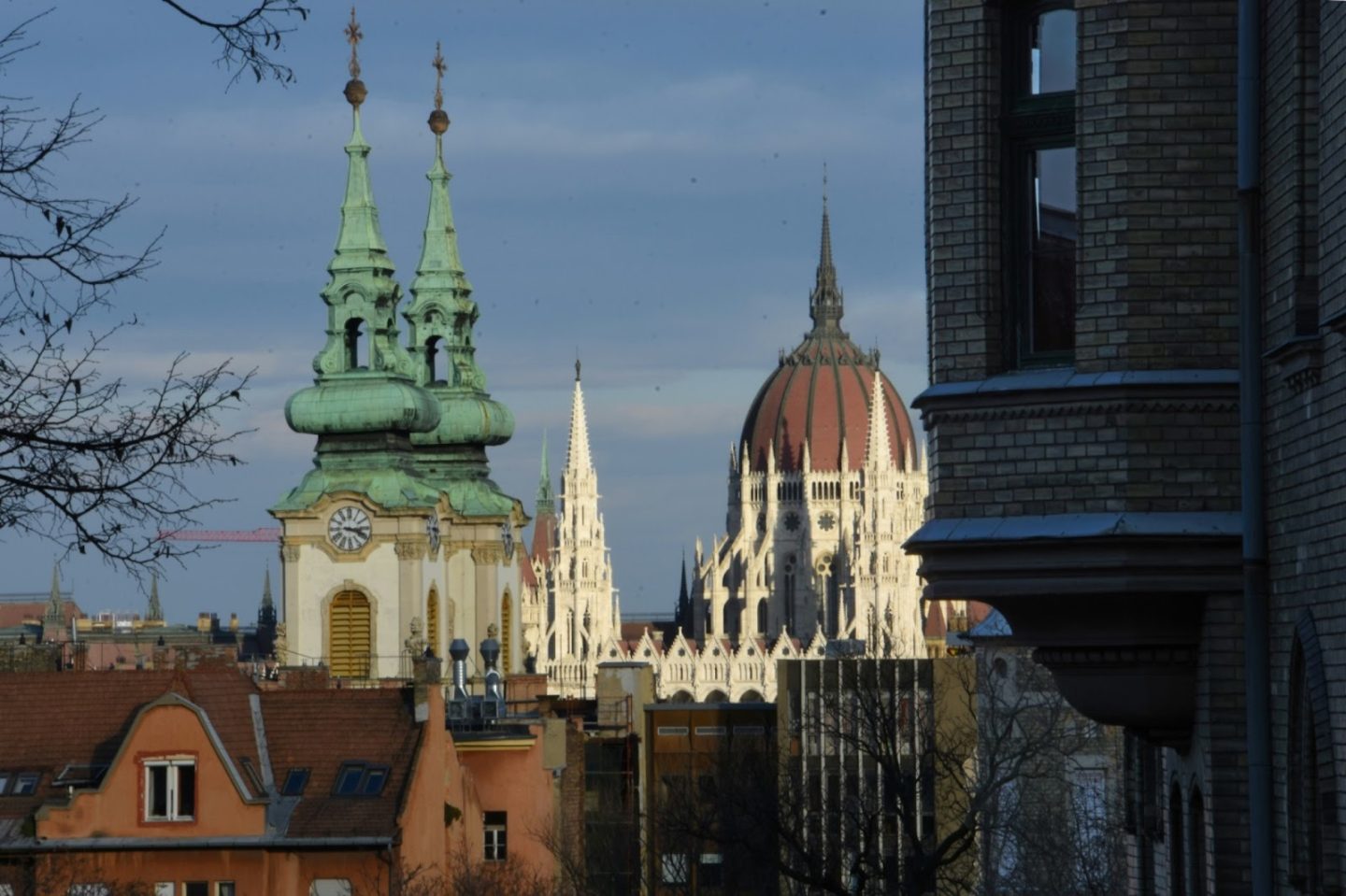
Budapest gathers around the Danube without framing it too tightly. Hills rise, but not dramatically. Bridges cross in measured spans. At dusk, lights gather along the water’s edge and stretch into the current, lengthening and breaking apart.
Baroque ornament exists here too, though sometimes it seems worn thinner. Domes above bathhouses carry steam that blurs their edges. Stone steps along the river slope downward with subtle irregularity. You run a hand along a railing and feel where countless others have done the same.
The city feels horizontal in places, then unexpectedly vertical. Balconies lean out. Courtyards drop inward. Nothing holds a single posture for long.
Food in Passing
Meals arrive without presentation. In Prague, pastry flakes against a plate and leaves a fine dusting that no one bothers to clear immediately. In Budapest, paprika threads warmth into broth that settles slowly in the bowl. Vienna offers something lighter — perhaps a thin slice layered with cream — though even that feels more habitual than indulgent.
You do not catalogue the dishes. You remember fragments instead. The way steam rises briefly and then thins. The slight resistance of a fork against pastry layers. The quiet concentration of someone stirring without hurry.
Eating feels less like event and more like continuation.
River and Rail
The Danube does not change its manner when crossing cities. It widens. It narrows. It carries light differently at different hours. Rail lines run parallel at times, then veer away, then return again. The vibration beneath your feet on the train becomes familiar enough that you stop noticing it.
Fields repeat themselves. Clusters of trees interrupt them. A church tower appears where you expect one, and then another appears somewhere you don’t.
Gradually the distinctions begin to loosen. Prague’s curves echo faintly in Budapest’s façades. Vienna’s measured spacing feels less central and more transitional. You struggle to remember which square belonged to which city. A dome aligns in memory with the wrong skyline and it no longer seems important to correct it.
Eventually, what remains is not sequence but texture. Stone warmed briefly by sun. River water shifting under bridges. The low, steady sound of wheels against track continuing somewhere beyond where you stopped paying attention.